
 Centric PLM
 Centric Planning
 Centric Pricing & Inventory
 Centric Market Intelligence
 Centric Visual Boards
 Centric PXM
 Experience Academy


 Fashion & Apparel
 Retail
 Footwear
 Outdoor & Sports
 Consumer Goods
 Manufacturers
 Home Décor & Furniture
 Food and Beverage
 Grocery Retail
 Cosmetics & Personal Care
 Consumer Electronics








Growth Playbook For Emerging Footwear Brands
Navigating 5 Critical Challenges Facing Footwear teams
Footwear brands today face an evolving landscape of challenges – from rising production costs and fast-moving trends to the growing demand for sustainability. These hurdles, while daunting, offer significant opportunities for brands to innovate and scale.
This practical guide is designed to guide emerging footwear brands navigate five key challenges – sustainability, rising costs, supply chain disruptions and process inefficiencies. With actionable strategies and real-world examples from successful companies, you’ll learn how to turn hurdles into growth and build a sustainable, competitive advantage.
Download to discover:
- Proven strategies to boost efficiency and streamline operations.
- Actionable tips on building a sustainable and competitive brand.
- Real-world success stories from brands like CROCS, Rothy’s and Merrell, showcase how the right tools fuel growth.
Challenge 1: Sustainability
Consumers increasingly demand sustainable and ethical footwear, but this is alongside a need to adhere to strict environmental regulations. Governments worldwide are responding with new legislation to drive sustainability.
In the US, California’s Responsible Textile Recovery Act of 2025 mandates apparel and footwear producers implement takeback, reuse and recycling programs, encouraging sustainable design. Similarly, New York’s proposed Fashion Sustainability and Social Accountability Act would require major brands to disclose supply chain impacts, including emissions, fair wages and water usage, while outlining plans for improvement.
These policies are reshaping footwear business models and pushing companies toward responsible, forward-thinking design and production.
Case Study
Stepping into success:
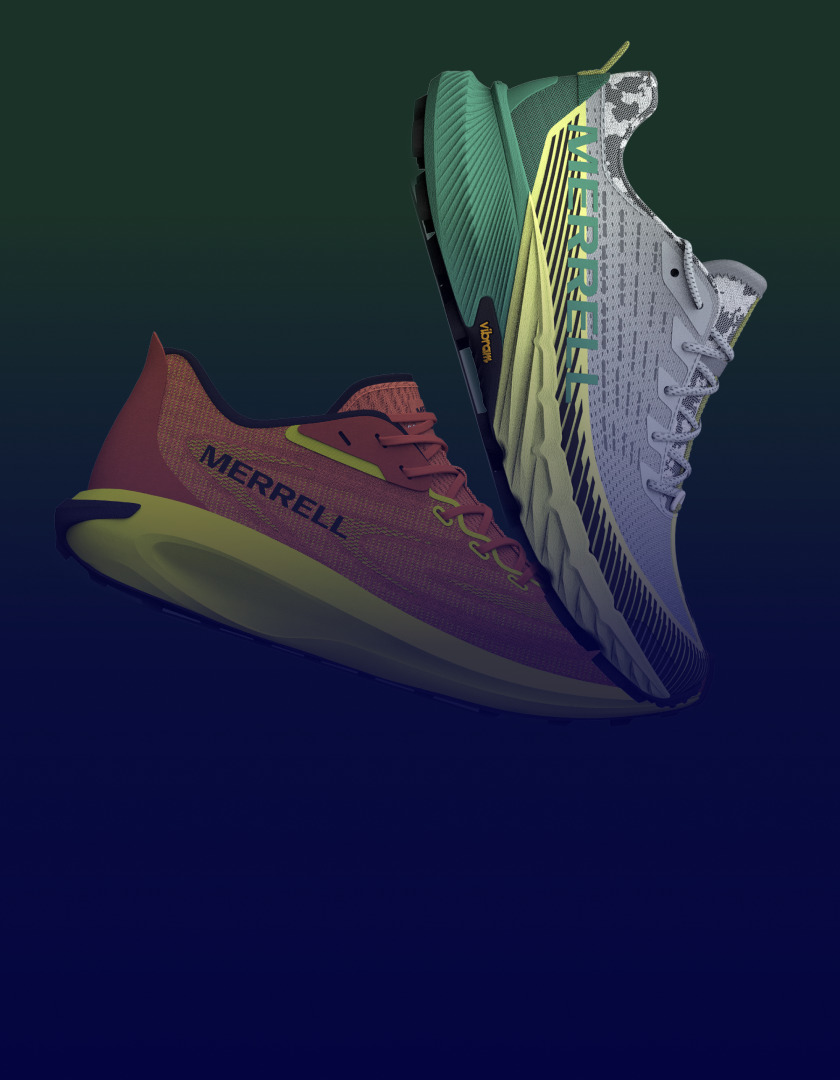
Merrel gains full visibility into global operations.
Challenge
Faced by significant challenges with disconnected digital tools, manual processes and limited visibility across global teams, hampered their speed-to-market and ability to leverage digital assets efficiently.
Solution
They implemented Centric PLM, a fully integrated product lifecycle management solution, enabling real-time visibility into the product creation pipeline, seamless collaboration and the consolidation of development inputs with supply chain partners.
Strategy
By using sustainable materials, processes and certifications, footwear companies can differentiate their brand while still ensuring compliance.
Result
Merrell achieved major time savings by eliminating thousands of manual data entries per season, improved sustainability through better material traceability and enhanced product development with 3D capabilities that reduce the need for physical samples.
Actionable tips
- Use product lifecycle management (PLM) system to track and manage materials, labeling and packaging.
- Integrate supplier certification data for full transparency.
- Address new requirements, e.g., end-of-life planning at product conception (material selection and design for disassembly).
- Access accurate cost updates and visibility into standardized Bill of Material (BOMs), to evaluate profitability and shape well-rounded collections.
- Leverage an end-to-end platform that records a product’s sustainability and environmental attributes throughout its lifecycle, to increase transparency across the supply chain to comply with stringent digital product passport requirements.
- Get actionable insights on sustainable trends, consumer preferences and competitor offerings to align product strategies with eco-conscious demands.
Challenge 2: Rising costs
Reducing waste to improve profit margins
Increased raw material prices, higher labor costs and stringent environmental regulations are eroding profitability. This challenge forces designers to seek more cost-effective materials and innovative manufacturing techniques while maintaining quality and sustainability.
Additionally, tariffs and global economic fluctuations further complicate budgeting and pricing strategies, which makes it essential for brands to balance affordability with profitability.
Strategy
Streamline design, sourcing and production to optimize resources.
Actionable tips
- Monitor and manage costs by identifying cost drivers using PLM data dashboards. Track expenses to find opportunities for savings and regularly update cost data to stay aligned with budget goals.
- Optimize material use by analyzing and selecting cost-effective materials that meet design and quality standards.
- Get access to real-time data and historical product information to enable teams to make quicker and more informed decisions.
- Connect design, merchandising, product development and assortment planning teams into single visual workspace to streamline collaboration and reduce time and effort spent on manual processes.
- Leverage Centric Visual Boards™ for preseason and in-season planning.
Case Study
Stepping into success: Crocs makes collaboration and creativity top priority
Crocs is an American footwear brand founded in 2002, famous for its innovative, ultra-comfortable foam clogs made from proprietary Croslite™ material, which quickly transformed from a quirky boating shoe into a global phenomenon beloved for its comfort, versatility and fun style.
Challenge
Crocs found themselves in a bit of a jam as their explosive global growth led to misaligned teams and sluggish communication.
Solution
The brand selected Centric PLM as the heartbeat of their operations, they now move at a brisker pace, with teams worldwide accessing the same real-time information, collaborating more creatively and focusing on what they do best-making great shoes.
Result
“When Crocs first started to work with Centric PLM, there was a perception inside the organization that it was just a product system. What we’ve been able to do in the last couple of years is really change that philosophy and we’ve really seen Centric PLM become the heartbeat of the organization” – SVP Global Product & Merchandising, Crocs
Challenge 3: Supply chain disruptions
Staying agile in a volatile market
Supply chain disruptions have an impact on most industries, but global apparel and footwear companies face particularly complex challenges. According to McKinsey, factors such as fluctuating demand, material price volatility, trade regulations and regulatory changes are reshaping the sourcing landscape.
Simply put, supply chain instability leads to production delays, stock shortages and frustrated consumers – threatening brand loyalty and profitability. To stay competitive, footwear brands must embrace digital solutions that enhance visibility, improve forecasting and enable proactive decision making in an unpredictable market.
Case Study
Stepping into success: Dan Post finds the perfect fit
Founded in the 1960s, Dan Post boots are synonymous with superior fit and fashion forward design. Its handcrafted method starts with the finest exotic skins and premium leathers handled by the finest designers in the world. The company produces approximately 150 new styles each year through its two brands: Dan Post and Laredo.
Challenge
With an increasing amount of sampling, sourcing, materials and design data to juggle, the company needed an “all-in-one” PLM solution to integrate with their ERP system.
Solution
Dan Post considered several options, but selected Centric PLM based on past experience, user-friendliness and ability to scale with business.
Strategy
Leverage digital solutions to optimize sourcing strategies by mitigating risks through technology-enabled supplier management, real-time data analytics and proactive planning.
Result
“One of the great things about Centric is that we can easily update it when we’re on the go. Because we will have all the information in one central place we will be able to generate line sheets very quickly. Our production and sourcing teams will be able to track material usage and hold factories accountable for the time period it takes to get samples made.” – Director of Product Development, Dan Post
Actionable tips
- Use PLM to track and evaluate supplier performance.
- Develop contingency plans for key materials and components.
- Access data on product assortment and inventory trends across the market, enabling adjustments in sourcing and production strategies.
Challenge 4: Digital transformation
Modernizing operations for growth
Many emerging footwear brands struggle to keep pace with industry giants due to outdated processes, disconnected systems and manual workflows. Without digital tools, brands face inefficiencies in product development and market responsiveness—hindering both growth and sustainability efforts.
Strategy
Implement a scalable PLM system to streamline product development, enhance collaboration and drive innovation. Leverage digital transformation to improve operational efficiency, increase agility and meet sustainability goals.
Actionable tips
- Adopt a future-ready PLM to centralize data, reduce errors and accelerate time to market.
- Partner with an experienced change management provider like Centric Software to facilitate seamless implementation and team adoption.
- Harness Centric Market Intelligence™ and AI-powered analytics to gain real-time insights into customer preferences, competitor strategies and sales performance.
- Benefit from a 9-12 week PLM implementation to get up and running quickly.
Case Study
Stepping into success:
Rothy’s is a forward-thinking footwear brand renowned for its commitment to circular design and operational sustainability leveraging innovative materials and scalable manufacturing to meet the rising demand for eco-conscious, high-quality consumer goods.
Challenge
Struggled with rapid growth, ambitious sustainability goals and supply chain disruptions, while relying on a patchwork of spreadsheets, emails and multiple file-sharing tools that created inefficiencies, risked data loss and made collaboration across teams challenging.
Solution
Rothy’s implemented Centric PLM to streamline product development, enhance cross-team collaboration and scale operations efficiently. The platform replaced manual processes with a centralized digital hub, boosting visibility, speed to market and sustainability tracking.
Result
“From a human perspective, Centric PLM makes life much easier for our people in design, product development and manufacturing. We’re able to work directly with our factory and eliminate the countless other manual steps that existed before Centric.” – Chief Supply Chain Officer, Rothy’s
Challenge 5: Process inefficiencies
Streamlining innovation with smarter tools
Inefficient workflows and disconnected tools hinder collaboration between design, production and merchandising teams – leading to delays, higher costs and errors in product development.
Strategy
Streamline product development workflows by centralizing data, improving communication and integrating advanced tools to optimize efficiency and decision making.
Actionable tips
- Centralize all product-related data in a single platform to reduce manual data entry, errors and miscommunication for faster time-to-market and better cross-team alignment.
- Visually collaborate on product concepts in real time and link them seamlessly to the PLM.
- Empower designers with AI-driven trend analysis to incorporate the latest styles into collections.
- Analyze market trends and competitor offerings to guide design and product strategies effectively.
Case Study
Stepping into success: BRUNT creates efficiency at scale
Founded in 2020 in Massachusetts, BRUNT is unique in how it collaborates with trade workers to develop high-quality products for the job site that make real workers’ lives easier. BRUNT is growing rapidly and has recently branched out into wholesale in over 100 retail outlets nationwide.
Challenge
BRUNG recognized that its teams were being held back by manual processes and scattered data.
Solution
After a rigorous selection process, BRUNT selected Centric PLM SMB.
Result
“Having one source of truth for product design and development information is key. We’ll be able to pull existing materials and components from the Centric library, which makes life a lot easier when we’re creating new products. Everything from generating information for purchase orders to having visual line plans and documents for marketing will take significantly less time, and it will definitely cut down on errors.” – Senior Director of Footwear, BRUNT
Conclusion: A step-by-step path to success
While many emerging footwear brands may see industry challenges as obstacles, successful leaders view them as opportunities for innovation and growth. By embracing digital transformation, emerging brands scale efficiently, differentiate their brands and stay competitive in an evolving market.
Key takeaways
- Prioritize sustainability. Utilize eco-friendly materials, adopt responsible manufacturing practices and obtain certifications to stand out while ensuring compliance.
- Optimize design, sourcing, and production. Streamline operations to reduce waste, improve efficiency and maximize resources.
- Strengthen supply chain resilience. Mitigate risks with technology-driven supplier management.
- Implement a scalable PLM system. Modernize and accelerate product development while enhancing team collaboration and agility.
- Centralize data and improve workflows. Leverage integrated digital tools to enhance communication, optimize efficiency and drive smarter decision-making.
How Centric Software solutions address the top 5 footwear challenges
This reference guide summarizes how Centric Software solutions empower emerging footwear brands to overcome these challenges and thrive:
| Challenges | Centric PLM | Centric Visual Boards | Centric Market Intelligence | |
|---|---|---|---|---|
| Sustainability | Streamlines product lifecycle management with eco-friendly material tracking and compliance reporting. | Enables visual planning for sustainable collections. | Tracks sustainable trends to align products with eco-conscious consumer demand. | |
| Rising costs | Reduces costs with efficient data management and collaboration. | Improves decision making to minimize overproduction. | Provides pricing analytics to optimize margins and maintain profitability. | |
| Supply chain Disruption | Enhances visibility and agility in the supply chain with centralized data. | Facilitates dynamic planning to adapt quickly to disruptions. | Monitors inventory trends to adjust sourcing and mitigate disruptions. | |
| Digital transformation | Integrates digital workflows, reducing reliance on manual processes. | Digitalizes collection planning with intuitive visual tools. | Delivers AI-driven insights to enhance e-commerce strategies and competitiveness. | |
| Process inefficiencies | Streamlines workflows to reduce redundant tasks. | Simplifies decision-making with intuitive visual collaboration. | Automates reporting to save time and improve operational efficiency. |
By combining Centric PLM with additional Centric Software® tools, emerging footwear brands can overcome inefficiencies while enhancing collaboration and making data-informed decisions leading to faster product launches, reduced costs and increased competitiveness in a fast-changing market.
Step into your sustainable growth journey today.